

Storage and shelving
Good storage makes regular home-dialysis deliveries easier to receive, check and use in the right order. We supply shelving and handling items for Gauteng households and help you plan a practical storage area, but your renal unit remains the source of all medical instructions.
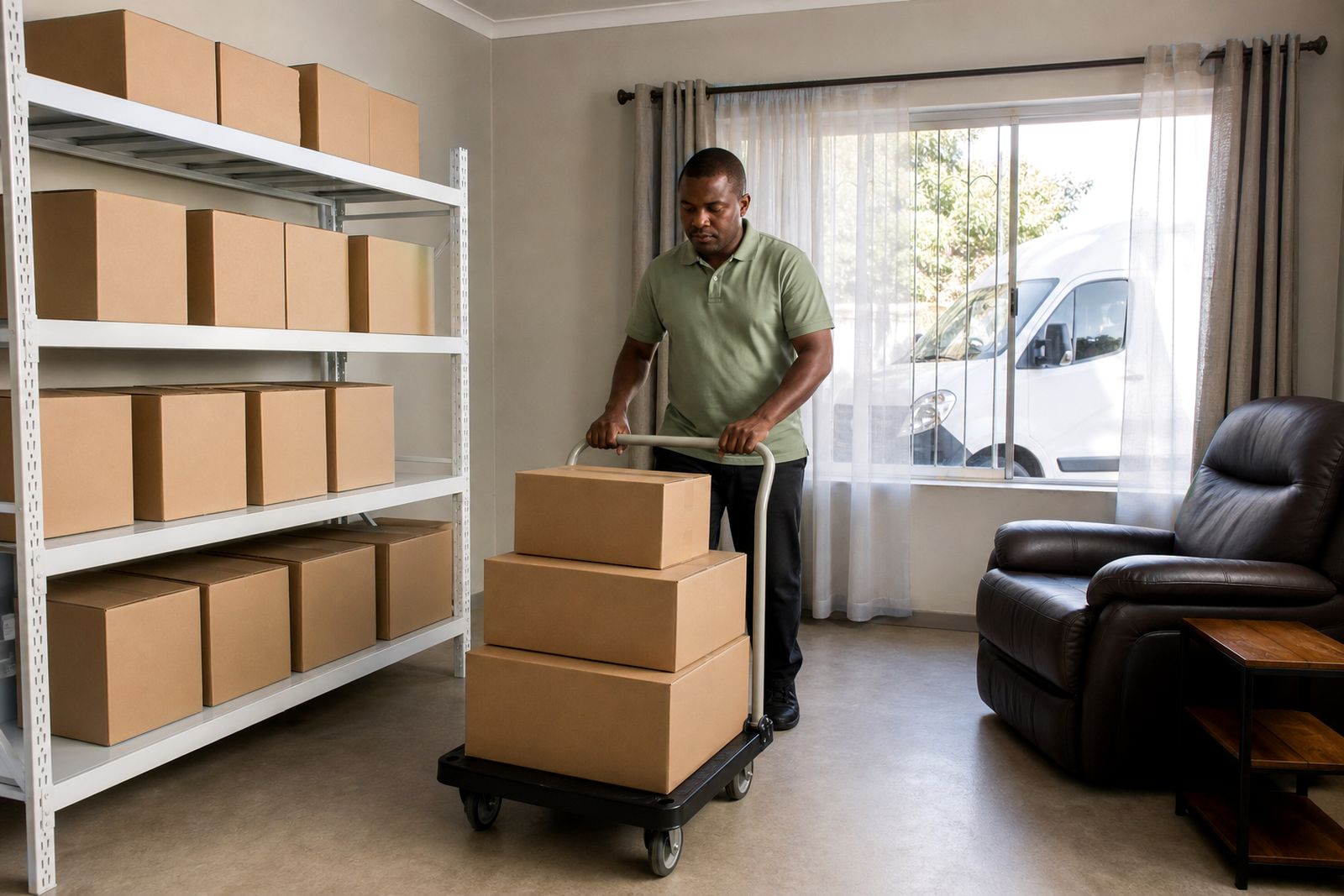
Why storage matters at home
When deliveries arrive every month or on another set schedule, boxes can build up quickly in a spare room, passage, garage or enclosed patio. Keeping cartons off the floor helps with cleaning, reduces damp contact and makes it simpler to see what has arrived. It also helps the household place older stock in front and newer stock behind so items are used in date order.
Across Gauteng, homes differ a lot. A Midrand townhouse may have one narrow store area, while a Pretoria freestanding house may use part of a garage. In Johannesburg and the East Rand, households often need to work around stairs, tight passages or limited parking at the gate. That is why we look at access, box size and available wall space before suggesting a storage layout.
What we supply in this section
This section covers the non-medical items that help a household receive and organise prescribed consumables ordered through the patient's own renal unit. We do not decide what should be ordered and we do not advise on treatment, but we can help with the practical side of making room for regular deliveries.
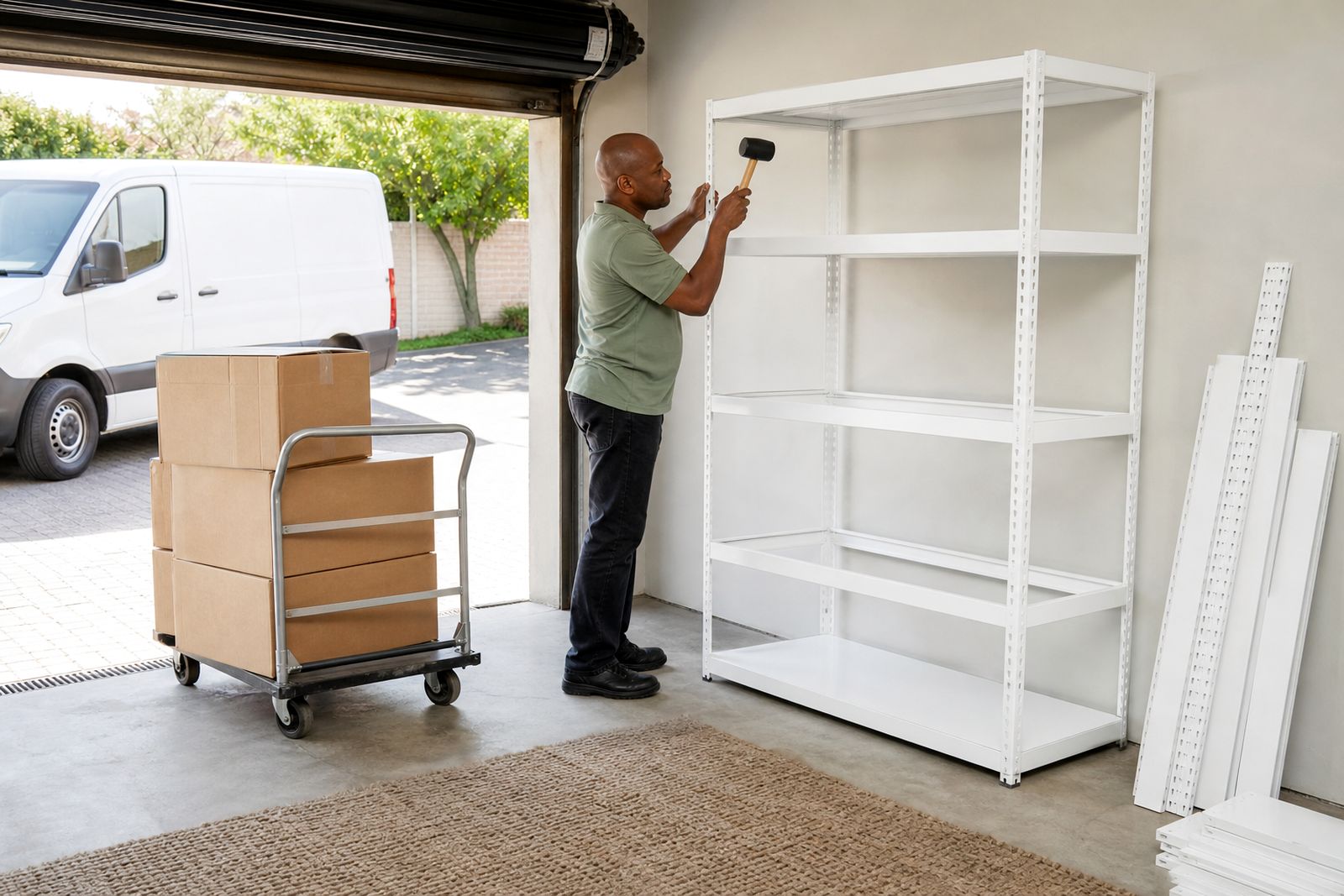
- Boltless shelving for cartons and packaged supplies
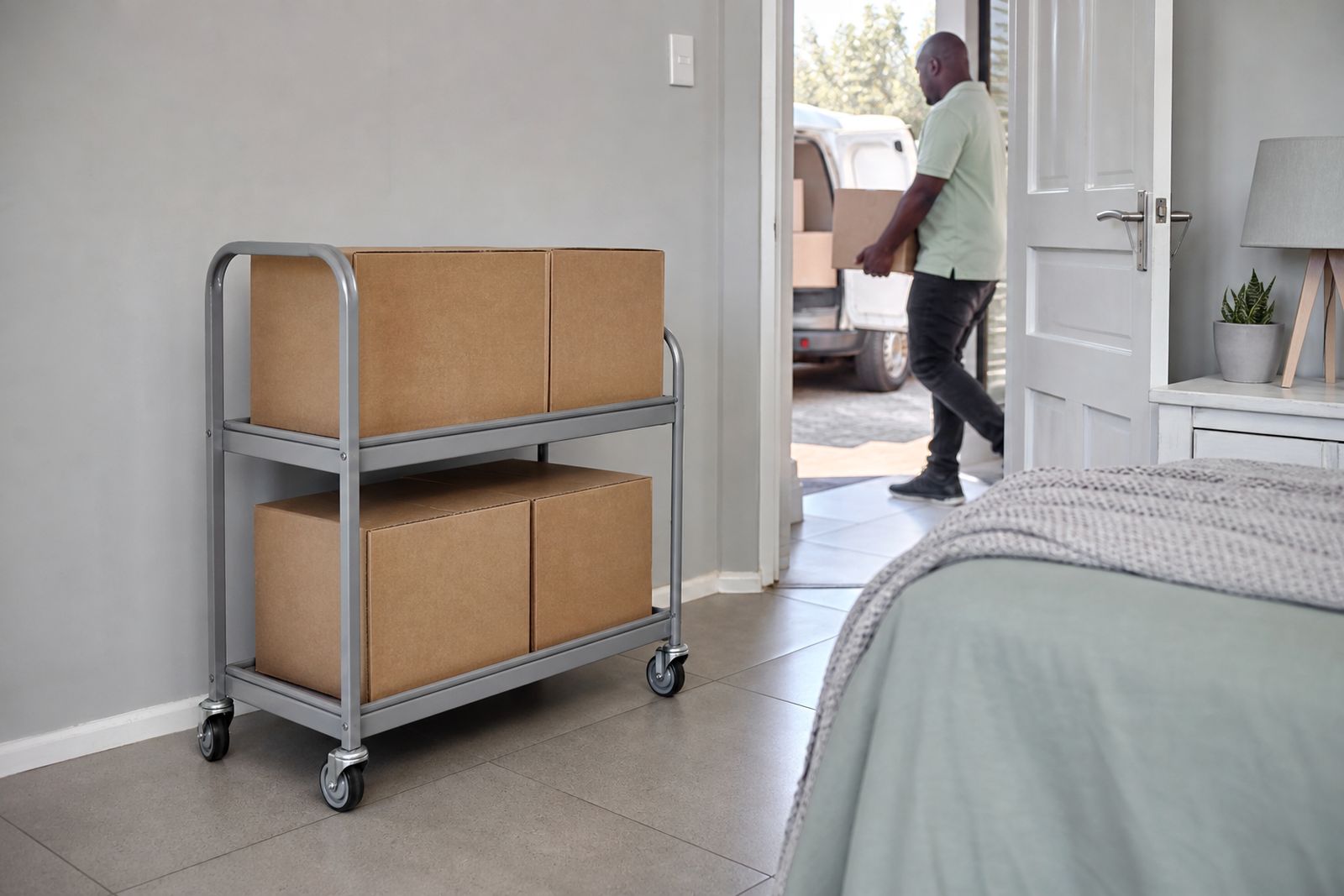
- Stock rotation trolleys to move boxes or staged items between rooms
- Basic planning guidance for shelf spacing, walkways and floor use
- Options that suit spare rooms, utility rooms, garages and enclosed indoor areas
If your home also needs weighing equipment or seating, those items are covered in the comfort section. This page focuses on storage first, because cluttered rooms become hard to clean and hard to manage after just a few deliveries.
Choosing between shelving and trolleys
Most homes need at least one fixed storage point and some households also benefit from a mobile option. Shelving is usually the first step because it creates clear levels for sorted boxes. A trolley is useful when stock must be moved from the main storage area to another room in smaller quantities.
- Choose shelving if you need a dedicated place for full cartons, date-order storage and better use of wall height.
- Choose a trolley if the route from storage to use area is awkward, or if lifting from floor level is a problem.
- Choose both if deliveries are larger and the household wants bulk stock stored in one area with working stock moved as needed.
In many Gauteng homes, a combined setup works well: shelving against one wall and a trolley for moving selected boxes or loose packs. That keeps the main room tidy and means fewer items stacked in corners or behind doors.
Practical points before you pick a size
Before selecting shelving, measure the room carefully. Check ceiling height, skirting depth, door swing and the width of any path needed for walking. Also think about where a delivery team can place cartons during drop-off so the room does not get blocked while goods are being checked.
- Leave a clear walkway so boxes can be reached without climbing over anything
- Avoid placing cartons directly against damp walls, especially in winter or in humid areas
- Keep storage away from leaking windows, hot water pipes and direct weather exposure
- Use lower levels for heavier cartons and upper levels for lighter items
- Allow enough room to read labels and dates without pulling everything out
Garage storage can work well if the space is clean and dry, but households should be careful about dust, heat and floor moisture after rain. In some complexes, body corporate or municipal rules may also affect what can be kept in shared or semi-open areas, so indoor space is usually the safer option.
Keeping stock in date order
A neat shelf is only useful if the order on the shelf makes sense. The basic idea is simple: earlier dated stock goes where it can be reached first, and later deliveries go behind or on a separate level until needed. Clear grouping also makes it easier when the household receives the next scheduled drop-off and needs to check that the right cartons have arrived.
Many households do best with one shelf per item type or one bay per delivery cycle. A small label system can help, even if it is just front, next and reserve. Keep the method simple enough that any family member can follow it. If the setup becomes too complicated it usually falls apart after a busy week.
How we help households plan the space
We supply and deliver the storage items and can help you think through where they should go before delivery day. That may mean deciding whether one larger shelving run is better than two smaller units, or whether a trolley would reduce carrying between rooms. We focus on practical household use, not clinical instruction.
Clients contact us through the enquiry form on our contact page. From our Midrand base we assist home-dialysis households across Gauteng, including Johannesburg, Pretoria, the West Rand and the East Rand. If you are preparing for scheduled deliveries and the room still feels too cramped, we can help you map out a tidier setup that keeps boxes off the floor and easier to manage.
What our Home Dialysis Deliveries customers say
Verified Google reviews
Questions we get asked
Do you supply the dialysis consumables themselves from this section?
This section is about storage and handling items such as shelving and trolleys. Prescribed consumables are delivered only as ordered through the patient's own renal unit.
Can you advise us on how much stock should be kept at home?
No. We do not give medical advice and we do not decide quantities. Households must follow the renal team and the ordering arrangements made through the patient's own renal unit.
Will you help us work out where shelving should go?
Yes. We can help with practical planning for access, floor space, wall use and stock rotation so the household can receive scheduled deliveries more easily.
Set up your deliveries
Send a note through our contact form with your suburb and what you need for your home set-up, and we will explain how deliveries work with your renal unit.
Open the contact form