

Boltless shelving
Boltless shelving gives home-dialysis households a straightforward way to store heavy consumable boxes off the floor and in order. We supply and deliver shelving for planned storage areas, with practical guidance on sizing and placement, but your renal unit remains the source of all care instructions.
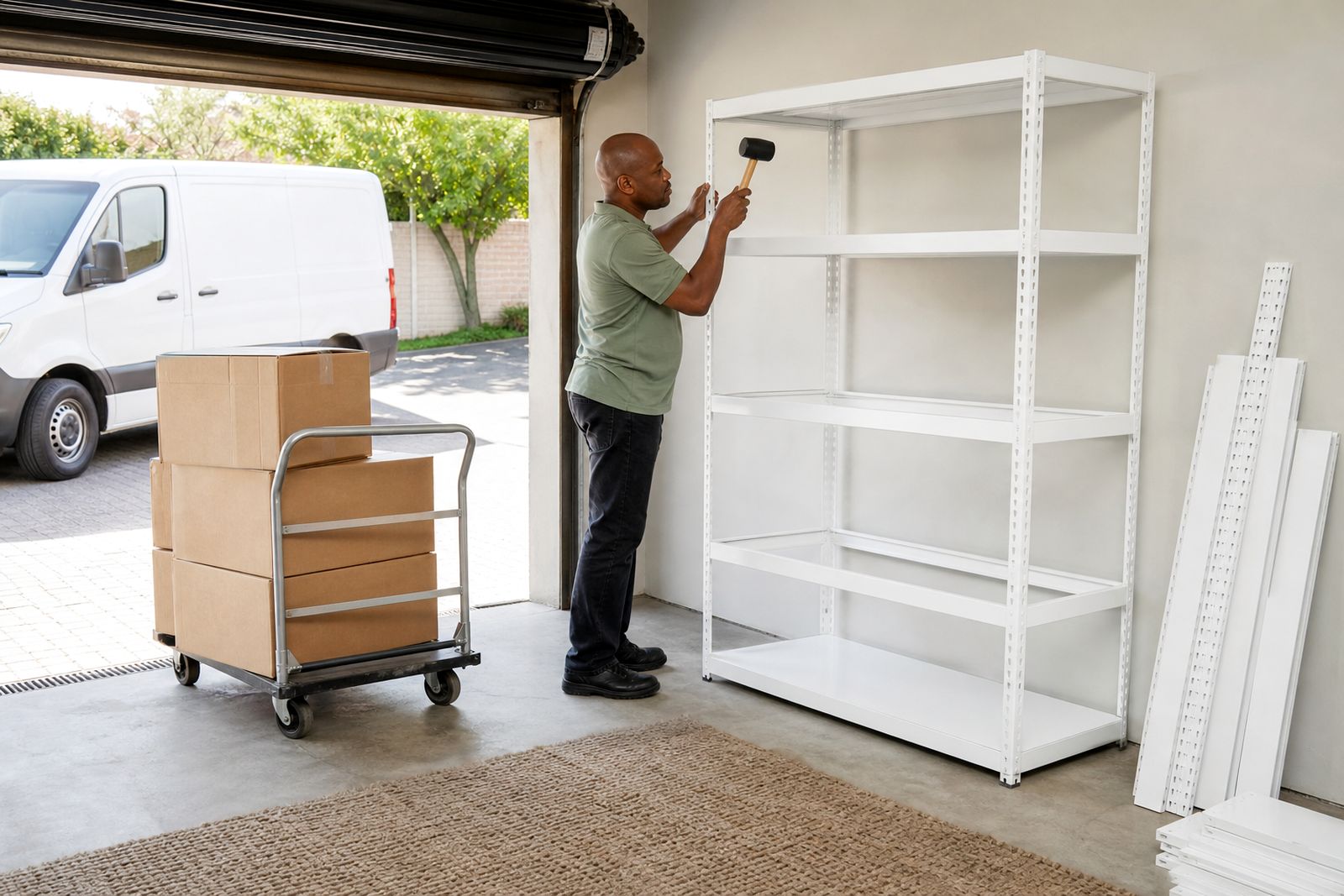
What boltless shelving is
Boltless shelving is a free-standing storage system made for quick assembly without rows of nuts and bolts. The uprights, beams and shelf panels lock together to form stable bays that can carry boxed supplies neatly and keep cartons off the floor, which helps with cleaning and stock rotation in a home setting.
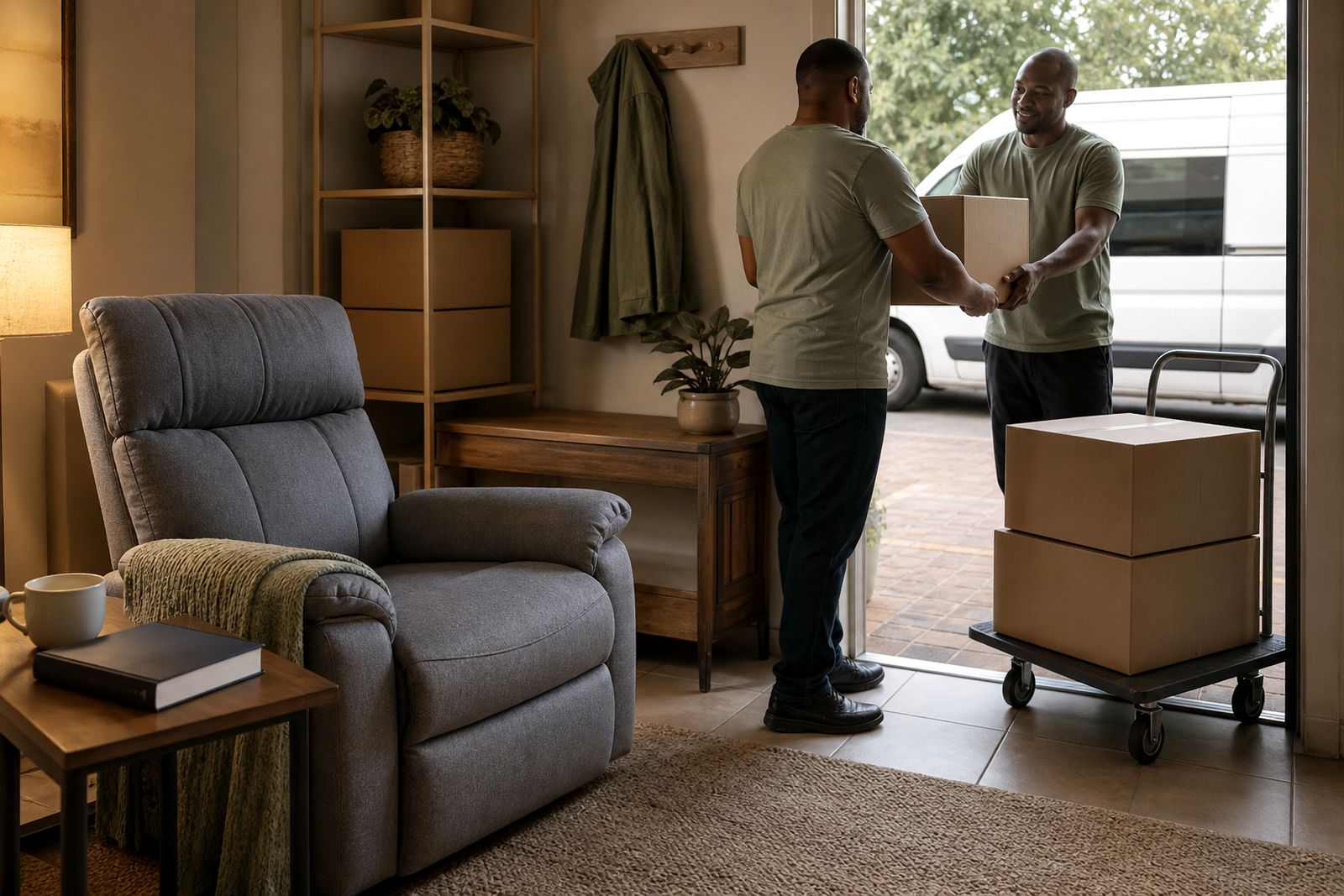
For households receiving scheduled consumable deliveries through their own renal unit, this type of shelving suits spaces where cartons arrive in repeated volumes and need a clear place from the first drop-off. It is meant for storage and organisation only. We do not advise on what items should be ordered or how much a patient should keep at home, that always comes from the renal team.
- Open-front access so boxes can be seen and reached easily
- Adjustable shelf levels to suit different carton heights
- Better floor clearance for sweeping and mopping
- Useful for spare rooms, enclosed verandas and utility spaces
Sizes, options and working limits
We supply boltless shelving in practical home-use sizes rather than warehouse runs. The most common layouts are single bays with 4 or 5 shelf levels, and double runs for households that need a longer wall filled. Shelf depth matters as much as height, because deep shelves can hold bulky cartons but also need proper walking space in front.
Typical widths start from compact bays for passage-end storage and go up to wider bays suited to a spare room wall. Heights usually suit normal home ceilings, with enough clearance for top-shelf access without needing ladders. Working limits depend on the bay size, shelf span and the load being spread evenly across the shelf panel. Very heavy point loads are not suitable. If one shelf is overloaded at the front edge it can lean or rack, so even loading is important.
- Compact bays for tight utility areas
- Standard bays for spare rooms and garages used as clean dry storage
- Extra shelves where more vertical separation is needed
- Optional shelf layouts to leave one taller opening for larger cartons
Where households expect regular deliveries, we usually suggest planning for some free shelf space rather than filling every level from day one. That makes receiving easier and helps keep newer cartons from being stacked in front of older ones.
Where it suits best and where it does not
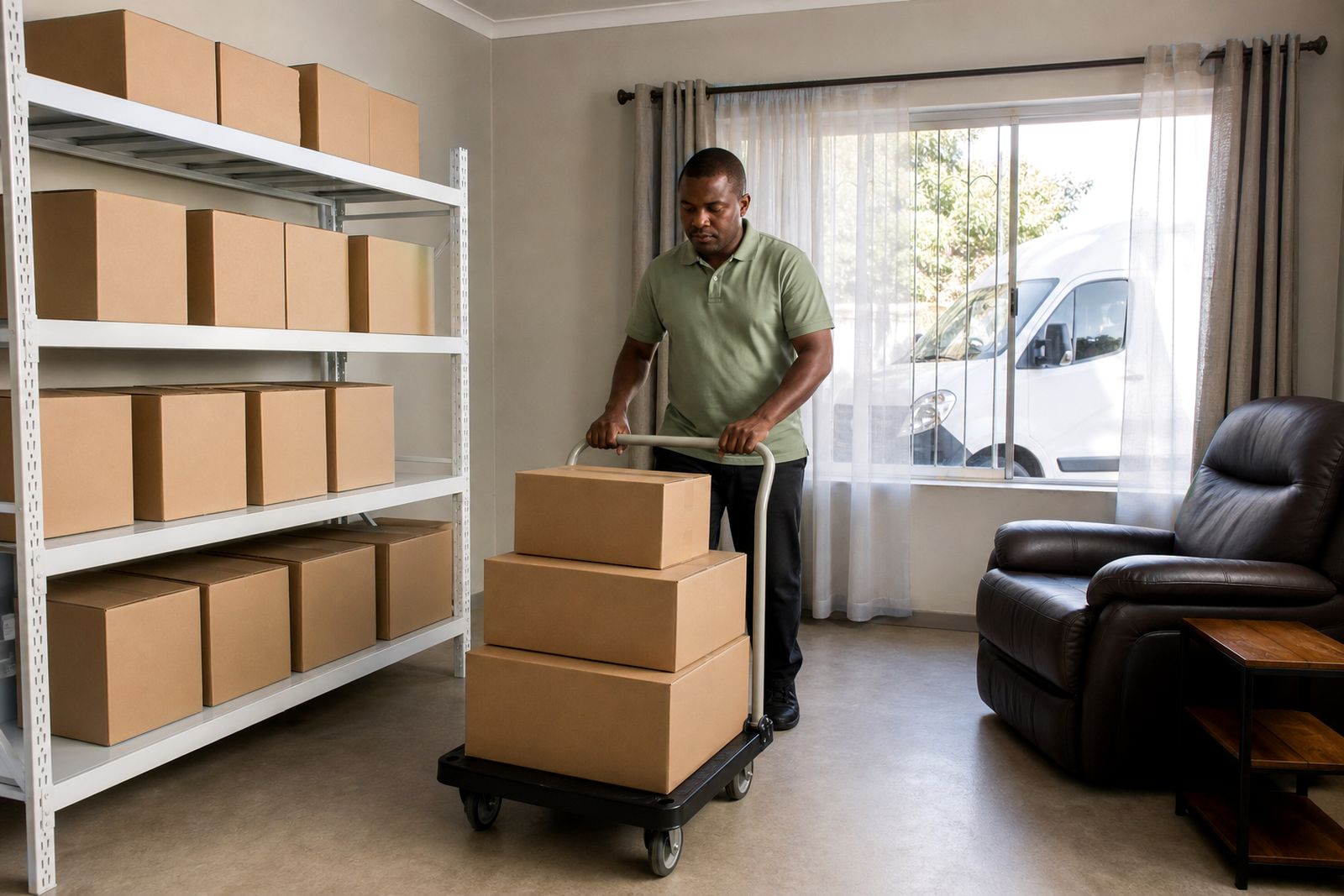
Boltless shelving works best in dry, level indoor areas where cartons need to stay clean, visible and easy to count. Good examples include spare bedrooms, closed studies, sculleries with enough turning space, and enclosed utility rooms. In Gauteng homes it is often used against a solid wall near the delivery route from the front door or garage so boxes can be moved in without crossing the whole house.
It is less suitable in damp or exposed areas. Open carports, uncovered patios and spaces with regular rain blow-in can affect packaging and shelf condition over time. Bathrooms are generally a poor choice because of moisture and limited floor space. Areas with uneven paving or cracked floors can also cause instability. If a room is used for many other household items, shelving can quickly become mixed-purpose storage which makes checking deliveries harder.
- Best for dry indoor rooms with a level floor
- Useful where there is direct access for carrying cartons in
- Not ideal for outdoor exposure or persistent damp
- Not suitable where doors, cupboards or windows will be blocked
Site needs before delivery and installation
Before we arrange supply and delivery, it helps to confirm the floor area, the ceiling height and the route from the gate or parking area into the storage room. A shelving bay may fit the wall on paper but still be awkward if it has to pass a tight turn, a narrow flat entrance or a stair landing. If your household has load-shedding backup equipment in the same room, mention that too so the layout can avoid blocked access.
The floor should be level enough for the frame to stand square. Smooth tile, sealed concrete and laminate floors can all work, but loose rugs and soft surfaces should be cleared first. Leave enough front clearance for a person to place and remove cartons safely. We do not carry out building alterations, electrical work or medical room conversions.
- Wall length and ceiling height
- Door widths, stair details and any tight corners
- Floor type and any slope or cracked sections
- Whether the shelving will stand in one bay or a full run
- Any obstacles such as light switches, windows or skirtings
Care, cleaning and everyday use
For day-to-day use, keep shelves loaded evenly and place heavier cartons on lower levels. That makes lifting safer and reduces sway. Try not to push bays hard from the side when moving boxes around. If a shelf panel is removed for cleaning or adjustment, it should be put back fully seated before loading again.
Cleaning is simple: wipe the frame and shelf surfaces with a lightly damp cloth and dry them afterwards. Avoid soaking the shelves or using harsh chemicals. In homes that get dust through open windows or nearby building work, a regular wipe-down helps keep packaging clean. If a room is prone to damp after summer storms, check the floor and wall corners often because cardboard cartons can draw moisture before the shelving itself shows a problem.
It also helps to keep a clear aisle in front of the shelving rather than stacking loose boxes on the floor. That small habit makes scheduled drop-offs and later checks much easier.
What to tell us when you enquire
When you contact us through the enquiry form, include the basics of your storage space and the type of household layout you are working with. We can then suggest suitable shelving sizes and whether one bay, multiple bays or a mixed layout will make the most sense for the room.
Please do not send treatment questions or ask us to confirm what consumables should be ordered. We only supply and deliver according to the order arranged through the patient’s own renal unit, and we do not provide medical advice or training.
- Your suburb in Gauteng and whether the property is a house, townhouse or flat
- The room size or usable wall length in millimetres or metres
- Photos of the planned storage area and the access route if possible
- An idea of the carton sizes already received at home
- Whether you also need scales, a recliner, a trolley or a room set-up kit
If you are unsure about measurements, send the room width, wall length and a few clear photos and we can work from that as a starting point.
What our Home Dialysis Deliveries customers say
Verified Google reviews
Questions we get asked
Can boltless shelving be used in a garage?
Yes, if the garage area is dry, level and kept reasonably clean. It should not stand where rain blows in, where vehicles may knock it, or where cartons could pick up damp from the floor.
Do you decide how much shelving a patient needs?
No. We can help plan the storage space, but we do not decide what consumables are required or in what quantity. Those decisions stay with the patient’s own renal unit.
Do I need to prepare anything before delivery?
Please clear the floor area, check access through doors and passages, and make sure the room is ready for shelving placement. It helps to send measurements and photos when you enquire.
Also worth a look
Set up your deliveries
Send a note through our contact form with your suburb and what you need for your home set-up, and we will explain how deliveries work with your renal unit.
Open the contact form