

Stock rotation trolleys
Our stock rotation trolleys help home-dialysis households keep prescribed consumables in order so older stock is used first. We supply and deliver practical mobile units for Gauteng homes, with guidance on choosing a size that suits your room and delivery pattern.
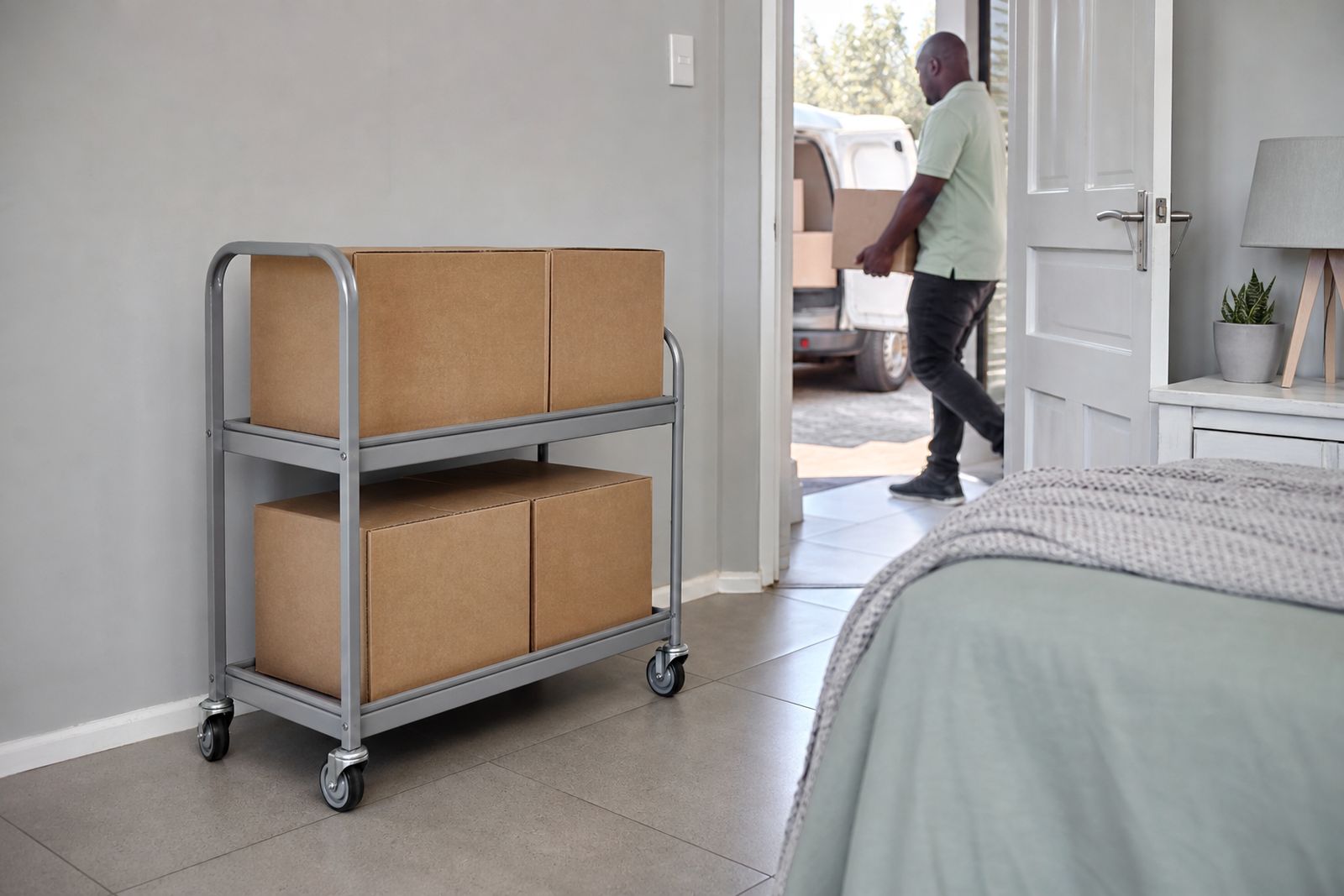
What a stock rotation trolley does
A stock rotation trolley is a mobile shelving unit used to organise delivered consumables so the oldest packs can be placed where they are reached first. In a home setting this helps reduce mix-ups between earlier and later deliveries, especially where cartons arrive on a schedule and space is shared with normal household use.
These trolleys are useful in spare rooms, enclosed patios, utility areas and other indoor spaces where boxes need to be moved, checked and accessed without carrying items from one fixed shelf to another. The aim is simple: keep stock visible, keep walkways clear and make it easier for the household to follow the renal unit's ordering and usage plan. We supply and deliver the trolley only, we do not advise on what items should be used or in what quantity.
- Helps separate older and newer delivered stock.
- Makes cartons and smaller consumable packs easier to reach.
- Allows cleaning under and around the unit.
- Useful where fixed shelving is not ideal.
Sizes, layouts and working limits
We offer trolley options suited to typical home storage areas rather than warehouse use. The most common layouts are two-tier and three-tier units, with flat shelves or lipped shelves depending on the type of packaged consumables being stored. A compact unit suits narrow passages and tighter rooms, while a wider trolley gives more shelf area where there is enough turning space.
Working limits matter. A trolley should roll freely without strain and should not be overloaded with dense cartons on the top shelf. In most homes the better approach is a lower centre of gravity with heavier items placed on the bottom level and lighter items above. If your floor has grout lines, small thresholds or uneven spots, wheel size becomes important too.
- Compact trolley: about 600 mm wide x 450 mm deep x 900 mm high, working load up to 80 kg total.
- Standard trolley: about 750 mm wide x 500 mm deep x 950 mm high, working load up to 120 kg total.
- Large trolley: about 900 mm wide x 600 mm deep x 1 000 mm high, working load up to 160 kg total.
- Typical shelf working load: 30 kg to 60 kg per shelf, depending on size and wheel set.
- Wheel options: two swivel and two braked swivel castors for steadier parking.
If you expect frequent movement between rooms, a slightly smaller unit is often the better choice, even when a larger one could fit on paper.
Where it suits best, and where it does not
Stock rotation trolleys suit households that receive regular prescribed deliveries and need a simple way to bring older stock forward. They are particularly useful where one person manages unpacking and checking, or where a room must serve more than one purpose during the week. In many Gauteng homes this means a second bedroom, a study nook, a converted dining area or a dry garage section with a smooth floor.
They are less suitable where the storage area is damp, exposed to weather or reached only by stairs with tight landings. A trolley is also not a substitute for full-room shelving if the household receives a large volume of boxed consumables at one time. In that case a trolley can still help with day-to-day access, but fixed shelving may need to carry the bulk of the stored items.
- Best for indoor dry areas with level floors.
- Good for sorting, checking and moving stock short distances.
- Not ideal for outdoor use, wet bathrooms or rough paving.
- Not meant for lifting over steps or loading into vehicles.
Space and site requirements before delivery
Before you enquire, check the path from the front door or garage to the intended room. Door widths, passage turns and floor transitions all affect what trolley size will move comfortably once loaded. Leave enough standing space beside the unit for opening cartons and reading labels, and enough room for the trolley brakes to be applied without blocking the walkway.
We recommend measuring the storage area and noting any skirtings, low window sills, power points or built-in cupboards that reduce usable width. If load-shedding affects the room lighting, think about where the trolley will stand so labels remain easy to read with natural light or a rechargeable lamp. In upstairs homes and sectional title units, access rules and lift size can matter too.
- Measure floor area, door openings and turning space.
- Check for thresholds, step-ups and uneven tiles.
- Confirm the room stays dry and reasonably cool.
- Allow access for a person to sort and rotate items safely.
Care, cleaning and everyday use
Routine care is straightforward. Wipe shelves with a mild household cleaner suited to the trolley finish, then dry them before reloading. Keep castors free of fluff and tape so the trolley continues to roll properly. If a wheel starts to drag, it usually needs cleaning rather than extra force. Avoid using harsh solvents or soaking any timber or board inserts if your chosen unit includes them.
For everyday use, place older stock at the front or on the shelf marked for next use, and newer delivered stock behind or below according to your own household method. Keep the heaviest cartons on the lowest shelf and do not stack so high that items can topple when the trolley moves. A quick check after each delivery saves time later and helps the room stay tidy, even when space is a bit tight.
If your home is in a more humid part of Gauteng during summer storms, good airflow helps prevent packaging from feeling damp. The trolley should stand clear of leaking windows, bathroom steam and floors that stay wet after mopping.
What to tell us when you enquire
The best trolley choice depends on your room, your access path and the kind of consumable cartons you need to organise. When you contact us through the enquiry form, a few practical details help us suggest a suitable option without back and forth.
- Your suburb and delivery area within Gauteng.
- The room where the trolley will be used.
- Approximate floor space available in millimetres or metres.
- Door widths, passages and whether there are stairs.
- Whether you need a compact, standard or larger trolley.
- If you want brakes on the wheels.
- Whether the trolley is for boxed stock, smaller packs or mixed items.
- If you also need shelving, scales, a recliner or a room set-up kit.
Photos of the space can also help, especially where access is narrow or the trolley must fit beside existing shelving. We can then supply and deliver a unit that suits the home setup, without guessing or oversizing it.
What our Home Dialysis Deliveries customers say
Verified Google reviews
Questions we get asked
Can a stock rotation trolley replace fixed shelving?
Sometimes, for smaller home setups. If you receive a larger volume of prescribed consumables, a trolley usually works best alongside shelving rather than replacing it.
Do you decide how the consumables should be arranged?
No. We supply and deliver storage equipment only. Households must follow their renal unit's instructions for prescribed consumables and stock use.
Can the trolley be used in a bathroom or outside room?
It is better suited to dry indoor areas. Damp rooms, outdoor spaces and rough surfaces can shorten the life of the trolley and make movement harder.
Also worth a look
Set up your deliveries
Send a note through our contact form with your suburb and what you need for your home set-up, and we will explain how deliveries work with your renal unit.
Open the contact form