

Keeping a delivery calendar
A simple delivery calendar helps a home-dialysis household stay organised and avoid last-minute pressure. The aim is not to manage treatment, but to keep track of scheduled drop-offs, storage space and the items your renal unit has ordered.
Why a delivery calendar matters
When consumables are delivered to a home, they take up space and they need to be received in the right place at the right time. A calendar gives the household one clear view of what is due, what has arrived and when to make room for the next drop-off. That is especially useful in Gauteng where traffic, estate access rules and busy workdays can make a delivery feel easy to forget.
A calendar also helps the household prepare without guessing what should be ordered. Your renal unit decides the prescribed items and quantities. We only deliver what has been arranged through that renal unit, so the calendar should track expected deliveries and stock on hand, not medical decisions.
Keeping a regular record can also reduce mix-ups between family members or carers. If one person is at work and another receives the delivery, the notes are already there. Everyone can see the planned date, the storage area and any building instructions in one place, which saves time later.
Choose a format the whole household will use
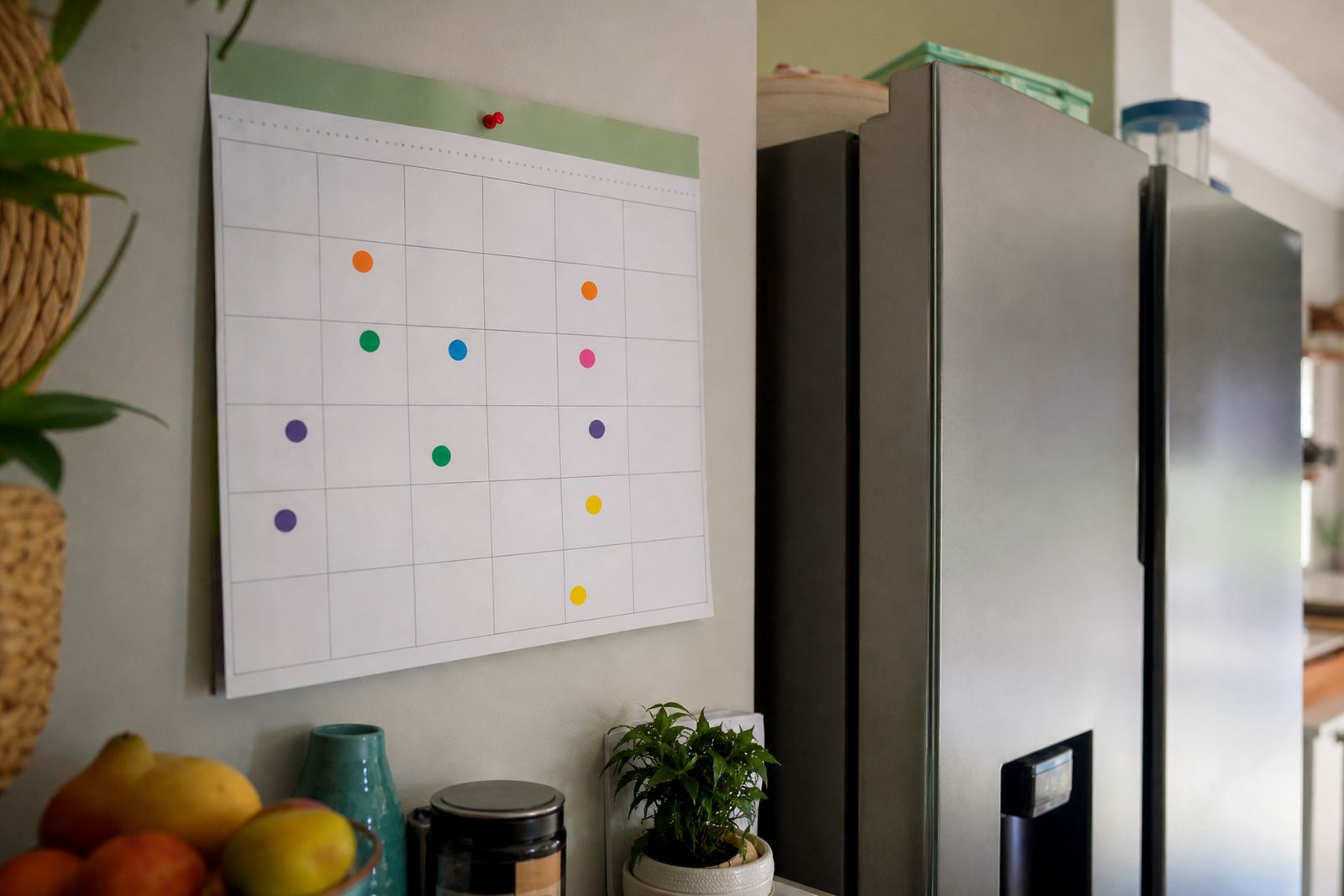
The best calendar is the one that gets checked every day. Some households prefer a wall calendar in the kitchen or utility room. Others use a notebook, a magnetic planner on the fridge, or a shared calendar on a phone. There is no single right method. What matters is that it is easy to read and simple to update.
If there are several people in the home, use one shared system rather than separate notes. Keep it near the area where deliveries are usually discussed or received. If your complex has strict gate procedures, include a reminder space for access details too.
- Mark the expected delivery date as soon as it is confirmed through the household arrangement with the renal unit.
- Write the delivery address exactly as it should be used, including unit number, estate name or gate instructions.
- Add a reminder a few days before the drop-off to clear floor space and check shelving.
- Use a tick box for “received and checked”.
- Keep a notes line for anything practical, such as lift access, stairs, or where cartons should be placed.
A paper calendar works well during load-shedding because it is always visible, and it does not depend on battery life or signal.
What to write on each delivery entry
Each entry should be short enough to scan quickly but detailed enough to be useful on the day. Start with the delivery date, then note the room or area where stock must go. If your home has a dedicated dialysis room, hallway shelf or spare room rack, write that down so whoever receives the order knows where to direct it.
Do not try to turn the calendar into a treatment record. The purpose is practical household organisation only. Keep health notes general and follow your renal team for any clinical questions.
- Expected delivery date.
- Name of the person likely to be home.
- Access notes for security, intercom or pets.
- Storage location for the new cartons.
- A reminder to check for visible damage and count packages against the delivery paperwork.
- A follow-up reminder to rotate older stock to the front.
If you receive support from a family member who does not live in the house, a photo of the updated calendar can help keep everyone aligned. A quick shared record prevents confusion later on.
Build in reminders before stock gets tight
A good calendar does more than mark the delivery day. It should also include simple check points between deliveries so the household notices any issue early. That could be a reminder to review available shelf space, check that items are still dry and off the floor, or confirm that the access route into the home is clear.
Try setting one regular check each week on the same day. It only needs a few minutes. Open the storage area, look at what is on hand and compare it to the next planned drop-off. If anything about the arranged supply looks unclear, contact your renal unit for guidance. We do not advise on what should be used or how much should be kept.
This weekly habit is useful in smaller homes and flats where storage fills up quickly. It is also helpful in damp weather when households want to keep cartons away from bathroom steam or coastal-style humidity from washing areas, even here inland where some rooms can still trap moisture badly.
Use your calendar with storage and room planning
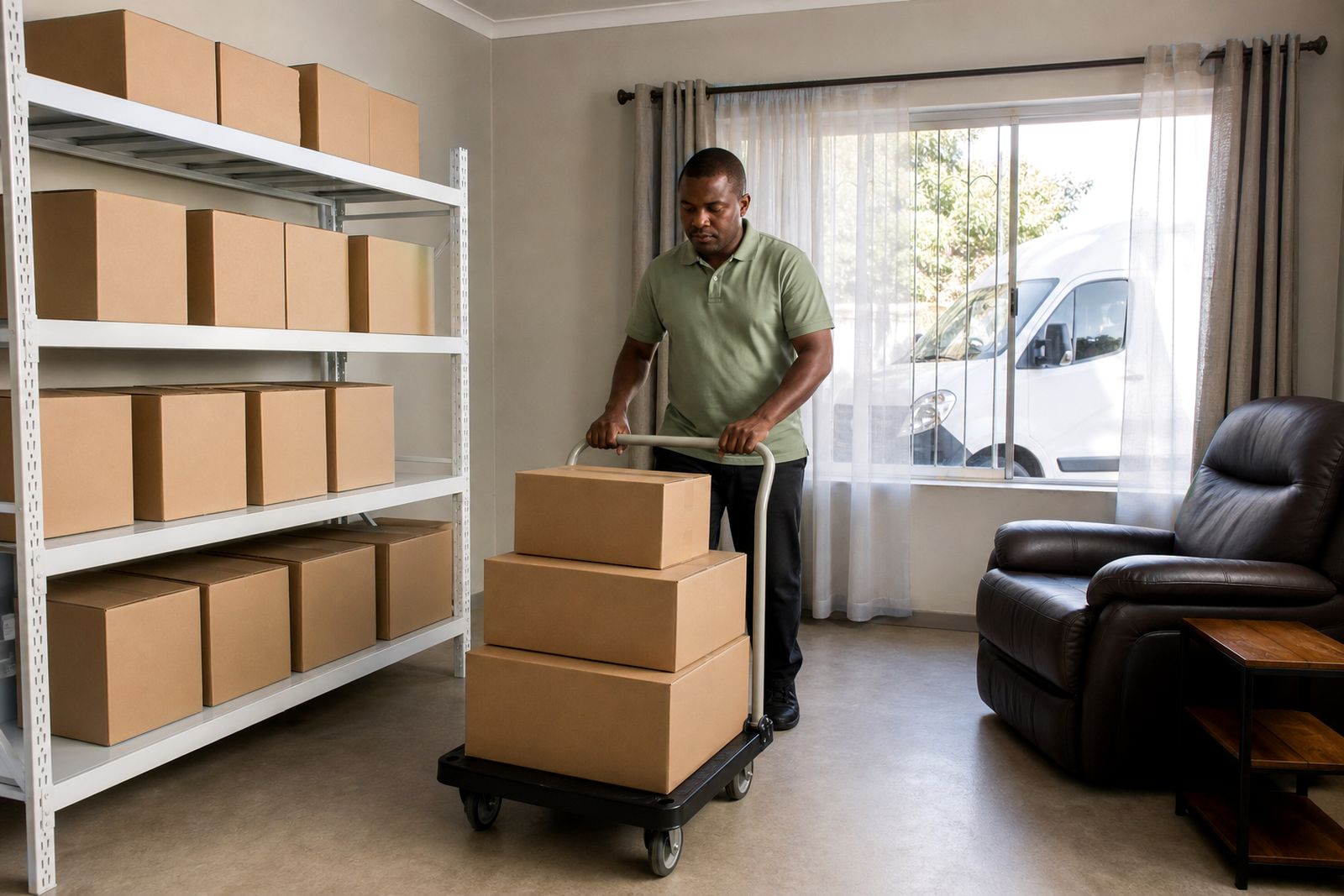
Your delivery calendar works best when it matches the way the room is set up. If stock is stored on shelving, note which bay takes the newest cartons and which area is kept for older cartons to move forward first. If you use a trolley for rotation or moving sealed cartons from one room to another, add that to the plan so it becomes part of the normal routine.
For households in Midrand, Johannesburg, Pretoria, the East Rand and the West Rand, homes vary a lot. Some have garages, some have small townhouse storerooms, and some only have a spare corner in a bedroom. The calendar helps make limited space manageable. It can remind you to keep walkways open, avoid stacking where there is damp, and leave enough room for the next drop-off.
- Check that shelving is stable and not overloaded.
- Keep stock off the floor where possible.
- Leave space near the front for the newest delivery to be sorted properly.
- Use labels or shelf markers if more than one household member helps unpack.
- Add a monthly reminder to tidy the storage area and remove unrelated items.
Small habits like these make receiving deliveries much easier, and they reduce the chance of cartons being left in the wrong place.
A simple checklist for delivery day
On the day itself, keep the process calm and consistent. A calendar entry should point the household to the same short checklist each time. That way even if routines change or a different family member is home, the basics still get done.
You do not need a complicated system. A few clear steps are enough. Tick them off, file the paperwork in one place and update the next expected date if it is already known. That small admin task saves a lot of back-and-forth later.
- Make sure the entrance path and storage area are clear.
- Receive the delivery and place cartons in the planned area.
- Check the delivery paperwork against what was dropped off.
- Look for any obvious external carton damage.
- Move older stock forward if your storage setup allows it.
- Tick “received and checked” on the calendar.
- Add any note the household should remember next time, such as gate delays or limited parking.
If something does not match the arranged delivery paperwork, note it clearly and follow the correct contact route through the household's usual renal unit process. Keep the record factual and brief, it helps.
What our Home Dialysis Deliveries customers say
Verified Google reviews
Questions we get asked
Should we use the calendar to decide when to request more consumables?
Use the calendar to track scheduled deliveries and what has been received, but do not use it to decide treatment quantities. Your renal unit determines the prescribed items and amounts.
Can we keep the calendar on a phone only?
Yes, if everyone in the household checks it reliably. Many homes still prefer a paper calendar as well, especially during load-shedding or when different family members receive deliveries.
What if our storage space is very limited?
Keep the calendar linked to a clear room plan. Mark where cartons should go, add reminders to free up space before the next drop-off, and use shelving or a trolley if that suits the home.
Also worth a look



Set up your deliveries
Send a note through our contact form with your suburb and what you need for your home set-up, and we will explain how deliveries work with your renal unit.
Open the contact form